Gerard K M Lim: Building Agroz Group into a Global AgTech Force
In an exclusive interview with APAC Entrepreneur, the distinguished entrepreneur shared his fascinating entrepreneurial journey.
By
Apac Entrepreneur Staff

In an exclusive interview with APAC Entrepreneur, the distinguished entrepreneur shared his fascinating entrepreneurial journey.
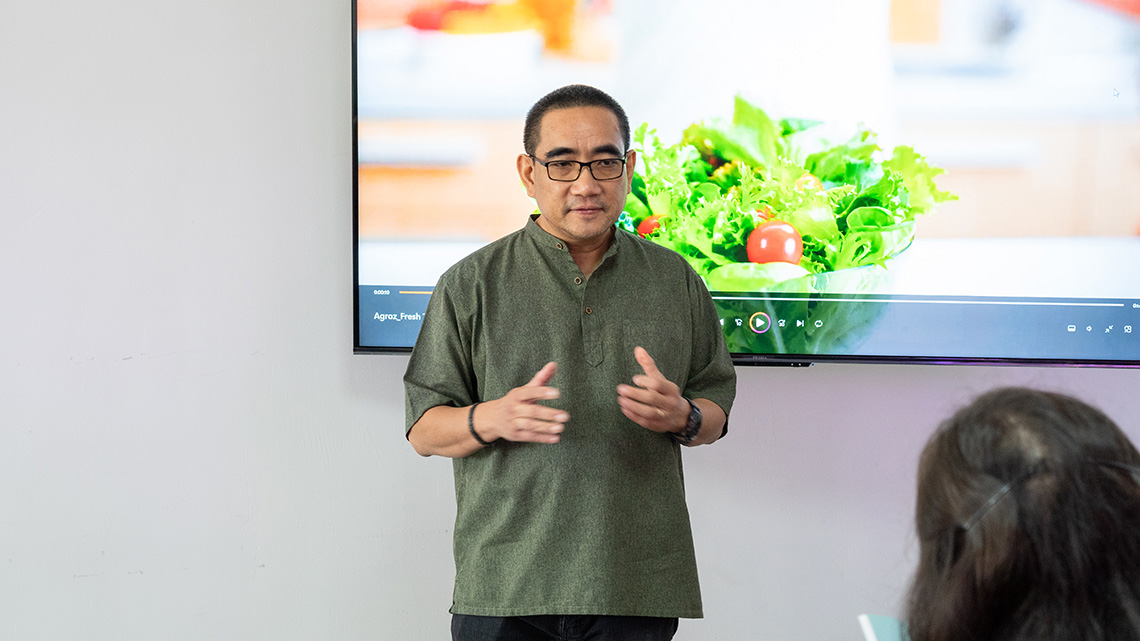
Gerard K M Lim, FOUNDER, DIRECTOR, AND CEO, AGROZ GROUP SDN. BHD.
Some entrepreneurs stay in the harbour. And some others change the rules of the game entirely by sailing into uncharted waters.
Gerard K M Lim belongs to the latter. Way back before vertical farms began rising inside Malaysian malls, and much before AI entered conversations about lettuce, Gerard had already spent decades building spaces where systems mattered the most: telecommunications, national transformation, digital infrastructure, and technological scale. But between digital networks and policy frameworks, he recognized a rising challenge in how the future would not only depend on how societies communicate, but in how they eat as well.
For over than 30 years now, Gerard has built his career in technology, media, and telecommunications, operating across startups, corporate leadership, and national regulatory ecosystems. “I can confidently say that one recurring principle shaped my journey over the years: that technology should not only exist merely to impress; it should exist to solve problems that matter,” he states.
From digital ventures and telecommunications innovation to national-level initiatives involving 5G, Digital ID, and Digital TV, Gerard developed an entrepreneurial mindset rooted in growth and in systems thinking. He spent years in digital transformation, perfecting the ability to scale solutions and build lasting frameworks. Then, he turned his attention to a sector that many often ignored: AGRICULTURE.
Rather than an outdated field, Gerard viewed agriculture as a pressing, unsolved puzzle on which human survival depends. Food insecurity, inefficient land use, weather fluctuations, and fragile supply chains revealed a glaring opportunity for reinvention. While many regard farming as a traditional concept, Gerard saw it as technological.
In 2020, in the midst of the COVID pandemic, together with his wife, Melinda Khoo, he launched Agroz with a vision to rethink urban food security. Melinda, co-founder of Agroz, was instrumental in setting up the operational foundation, marketing, and the brand essence of Agroz. And today, the AgriTech company integrates sustainability and digital technology using AI-powered Controlled Environment Agriculture (CEA), IoT infrastructures, precision agriculture, and the central Agroz® OS platform.
In practical terms, Agroz grows pesticide-free produce using up to 95% less water and significantly less land than traditional agriculture. But strategically, Gerard’s mission is to redefine food security itself.
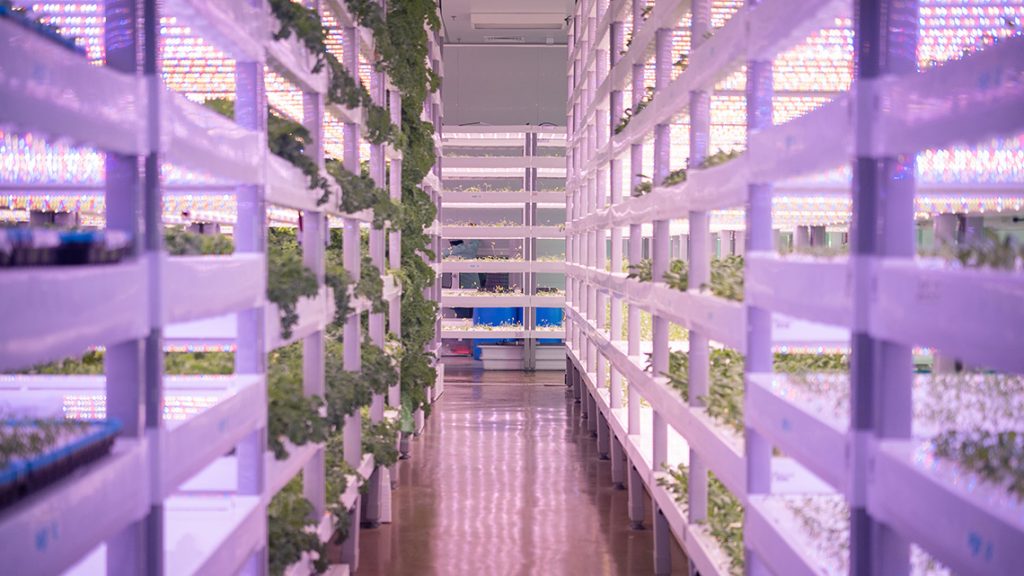
It goes without saying that pioneering a capital-intensive, emerging industry like vertical farming comes with grave problems. It is a steep climb, requiring heavy foundation work, constant market navigation, and solid legs, not just a map outline.
Gerard’s response to this was neither impulsive nor idealistic; it was structural. He diversified Agroz’s business model across farm design, operations, produce distribution, retail partnerships, education, and technology licensing. Rather than building a company dependent on one revenue stream, he took the road less traveled and built an ecosystem.
This approach helped Agroz Group evolve from a small startup ambition into a huge, award-winning Malaysian AgTech force, earning accolades such as the ‘Best Agrotechnology Award (2024)’ and the ‘Malaysian Digital Status (2026).’
For all its promise, vertical farming is not an industry that rewards impatience. Unlike software startups that scale through code alone, controlled environment agriculture requires high capital, scientific expertise, and physical infrastructure. And in all this, Gerard’s work is not just about building an agritech company; it is about establishing confidence in a new food production paradigm.
That challenge became especially apparent during Agroz’s formative years. As global food security concerns grew louder, vertical farming remained a niche, experimental concept rather than a practical business. Investors doubted its scale, customers balked at prices, and the market was only beginning to explore tech-driven agriculture.
Still, instead of letting those concerns stop him, Gerard used them to navigate forward. If the industry lacked confidence, the approach was not louder marketing; the approach was stronger proof. He focused on creating systems that could demonstrate measurable outcomes. And gradually, Agroz enhanced its farming environments, advanced its technology, and optimized resource efficiency. The company’s goal was not just about growing crops indoors, but about redefining agriculture as a smarter, cleaner, and more predictable system for uncertain times.
However, Gerard recognized another reality that many founders eventually encounter in their own journeys: a sustainable concept means nothing without commercial viability. That’s why he deliberately built Agroz as more than a basic farming operation. The company expanded into technology development, retail collaborations, education incentives, farm design, and operational consulting. And so each component strengthened the broader ecosystem while creating multiple pathways for growth.
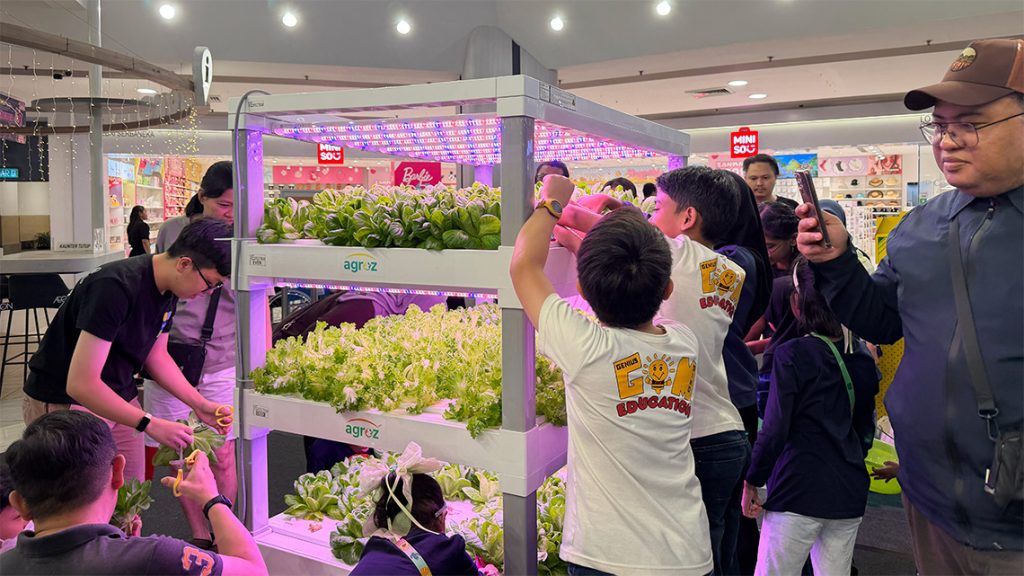
As CEO, Gerard’s leadership reflects a collaborative, adaptive, and innovation-driven approach. Having worked across startups, regulatory bodies, and corporations, he understands that sustainable innovation rarely comes from hierarchy alone.
At Agroz, he fosters a high-trust culture of innovation, enabling teams to operate independently and effectively. “For me, leadership is not about controlling every variable; it is about creating environments where innovation can thrive responsibly,” Gerard observes.
That mindset also helps to secure overall health and wellness. In sectors as demanding as technology and agriculture, Gerard aims to bridge strategic focus with sustainable energy through intentional prioritization, structured systems, and team-driven execution.
This approach also reflected Gerard’s lifelong philosophy: lasting impact is not built on isolated innovation; it is built on systems that reinforce one another. That same thinking shapes how he defines success today. Revenue and market share are standard entrepreneurial benchmarks. And Gerard does not ignore them, but believes they only tell part of the story.
For him, true success exists at the intersection of commercial performance and societal contribution. Financial growth does matter, but only when paired with a much broader impact. He defines entrepreneurial success through the ability to improve food systems, promote sustainability, and create lasting value for communities. A profitable business creates sustainability for itself, and a meaningful business creates sustainability for others. And it is that very distinction that continues to guide Agroz’s evolution. Every innovation, operational tweak, and expansion effort ultimately points toward building long-term food resilience for future generations without depleting our finite resources.
This is perhaps Agroz’s greatest differentiator: not merely growing vegetables, but engineering resilience itself. Gerard actively extends that philosophy beyond commercial farming through Agroz EduFarm in Wangsa Maju, Kuala Lumpur, offering entrepreneurs, students, families, and stakeholders a first-hand look at the next generation of sustainable agriculture. More than a mere display, the EduFarm is a living classroom dedicated to nurturing awareness, hands-on expertise, and future sustainability innovators. Besides running EduFarm, Gerard reshapes urban agriculture with AI, visionary technology, and a commitment to deeper agricultural understanding.
Looking forward, Gerard is driving bold, sustainable progress that already transcends national borders. As Agroz continues expanding its technological capabilities and international footprint, the company also marked a historic milestone by becoming Southeast Asia’s first AgTech company to be listed on the Nasdaq (AGRZ). Though for the founder, the achievement represents far more than international recognition. It signals that agricultural innovation developed in Malaysia can compete confidently on the global stage while attracting greater attention to sustainable food technologies emerging from the region.
Gerard also aims to position Agroz Group as a global AgTech leader capable of redefining food production at scale. His vision extends much beyond Malaysia’s borders and into a future where technology-enabled farming addresses global food insecurity with intelligence, sustainability, and precision.
For the next generation of entrepreneurs, his advice is both simple and profound: “My advice for entrepreneurs is to solve real-life problems, stay adaptable, and build where technology meets sustainability.” Because Gerard K M Lim’s story is not ultimately about replacing or leaving technology behind for agriculture. It is about applying a lifetime of digital mastery to one of the oldest human necessities, and proving that the future of farming may very well be written not only in soil, but also in code.