
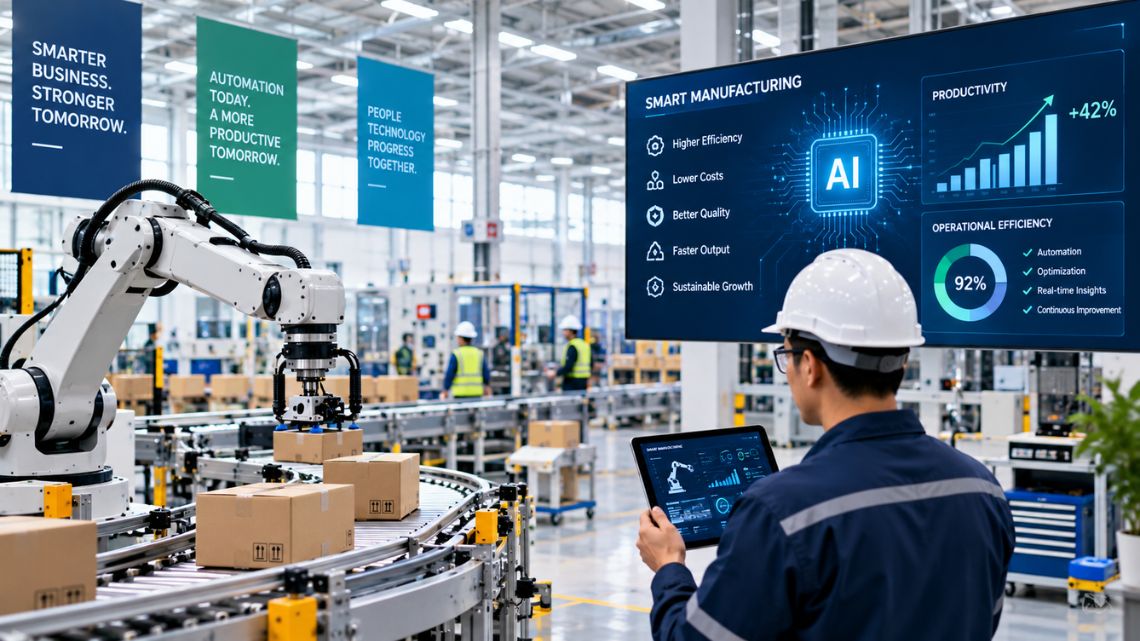
It’s a strange, frustrating thing when a company gets too busy; everyone works harder, yet the more important work keeps getting pushed to tomorrow or “just later”.
Picture this: It’s Friday, and despite a full week of non-stop typing and clicking, everyone at a Japanese firm wonders what they actually accomplished. One employee spent an entire Wednesday trying to summarize a report, another lost a precious hour hunting down a basic document, and a third burned away an entire Thursday evening turning meeting minutes into a colourful presentation.
This is where AI tools can be used to efficiently change the way APAC businesses get work done in 2026. Their goal is not to rely completely on chatboxes, but to shift the routine and boring work to technology so people can spend more time prioritizing creative thinking, making important decisions, and providing better customer care. For APAC Entrepreneurs, this changes AI from a highly debated trend into an essential management framework.
APAC Entrepreneur Starts With the Work Nobody Wants
The easiest place to introduce AI is often the work employees already wish they could skip. Think about meeting summaries for a second, or even document searches, template drafts, routine emails, data sorting, customer service responses, or repetitive reports. AI can handle the first layer of these jobs while employees focus on reviewing, verifying, and improving the final result.
Microsoft’s 2026 Work Trend Index dropped some interesting facts: 49% of Copilot conversations are actually used for heavy mental lifting, like brainstorming and problem-solving. Not only that, 66% of users say AI helps them focus on the more important work. Managers can take advantage of this insight by encouraging employees not to automate everything, but just to use AI to clear out the busywork so the team can focus on their real priorities.
AI Can Be the Best Workplace Sidekick
AI becomes much more useful when employees start treating it as an active helper as opposed to being just a lookup tool. The marketing team of a Japanese startup can ask AI to turn customer feedback on their mobile app into recurring patterns. The sales team from the same firm can summarize lengthy client conversations before a follow-up, while the operations manager can ask AI to compare reports and highlight unusual changes. The founder themselves can use AI to turn incomplete thoughts and rough ideas into a first draft before personally improving the strategy.
The real work actually starts after the AI responds. Employees still need to make sure they cross-check facts, revise context for more nuance, correct mistakes, and stand responsible for the final approval. High-performing teams are not looking to automate processes entirely, but to only leverage AI for improving human-machine collaboration in the digital era.
Five AI Tools Won’t Fix One Bad Process
Here comes the trap. A business can give its employees full access to five different AI platforms and still find that they accomplish little if nobody knows what problem those tools should solve. A better approach to this scenario starts with the work itself.
For example, employees spend hours searching for product facts across different sites just to make a weekly report. An AI assistant can do the same heavy lifting in a few seconds by collecting facts, providing direct links, organizing them, and writing a first draft that one team member can go over. Likewise, if the customer service team answers the same questions every day, managers can create an AI-supported system that suggests responses in a chatbox so employees can check them before hitting send.
As per PwC’s 29th Global CEO Survey, using AI boosted revenue for 39% of Asia-Pacific CEOs over the last 12 months, and 26% reported actual cost reductions. However, only 26% fully integrated AI across most of their business, like data, strategy, talent, investment, technology, and responsible AI. Buying AI tools does not drive productivity; building better ways of working with them does.
Let AI Give Time Back to People
Productivity does not mean squeezing out more tasks into an already full schedule. If AI saves an employee an hour, managers should ask what that hour can achieve elsewhere. Maybe an employee can spend that saved hour to speak to a customer for a few more minutes, coach a colleague, study a new market trend, or finally submit that one long overdue project.
PwC’s 2025 Global Workspace Hopes & Fears Survey notes that daily GenAI users reported massive productivity boosts compared to the more occasional users (92% vs. 58%). Moreover, PwC’s 2026 Indonesia data reveals an even stronger trend (96% vs. 75%). This proves that AI works best when companies reinvest saved time.
The Smartest AI Strategy Keeps Humans in Charge
Despite the growing concern and controversy behind AI replacing human talent across the globe, the biggest productivity mistake of 2026 is not about using AI primarily for everything, but about using AI without changing the way people work. Microsoft’s 2026 Work Trend Index shows this tension clearly. Thanks to AI, 66% of Singaporean users are producing work they never could 12 months prior, but an overwhelming 88% still take credit and responsibility for the results.
That gives APAC entrepreneurs a framework for automating routine tasks, organizing information, uncovering hidden patterns, and supporting daily workflows. Nevertheless, managers make sure that employees remain responsible for quality, judgement, and outcomes. The true goal of AI-driven productivity is to give people enough time to focus on high-impact work.
To read more, visit APAC Entrepreneur.